Long Story Short
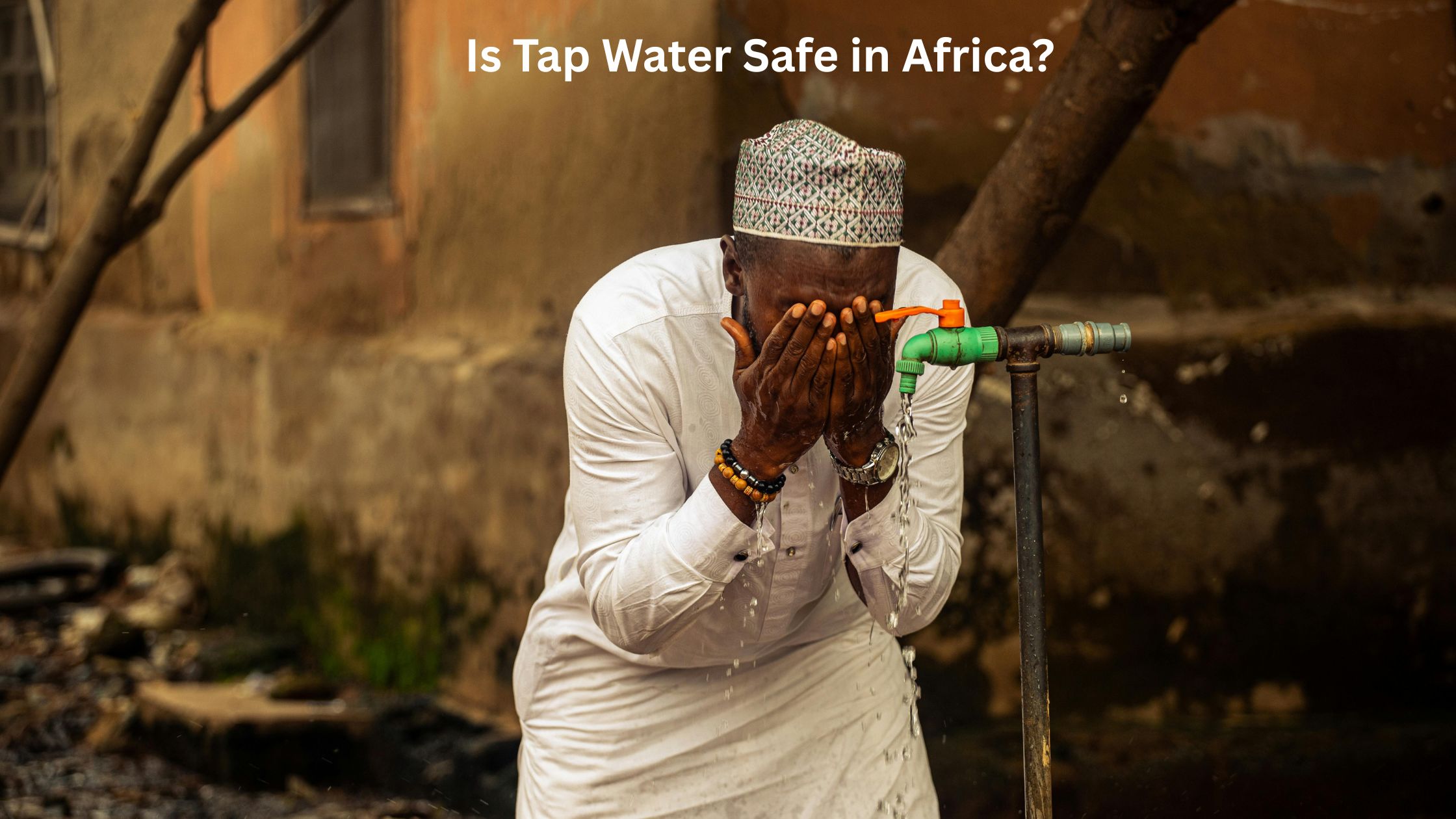
No — tap water is NOT safe to drink in the majority of African countries. Travellers should assume tap water is unsafe unless they have specific, current, local knowledge that it has been independently verified as potable. Bottled water, boiled water, or water treated with a certified filter is the only safe default across the continent.
Africa is a continent of 54 nations, vast geographic variation, and deeply uneven infrastructure investment. Water safety is not a single answer — it is a country-by-country, city-by-city, and sometimes neighbourhood-by-neighbourhood reality. This detailed guide gives you the facts you need, broken down by country, contaminant, and mitigation strategy, so you travel with confidence and zero gastrointestinal regret.
The Problem: Infrastructure Vs. Treatment
According to the WHO/UNICEF Joint Monitoring Programme (JMP) 2023 report, only 27% of Sub-Saharan Africa’s population has access to safely managed drinking water. Even where municipal water treatment plants exist and function correctly, the pipes that carry water to taps are frequently old, cracked, and subject to cross-contamination from sewage lines. This means water that leaves the plant potable can arrive at your tap contaminated.
Three distinct failure points create risk for travellers:
- Treatment failure — underfunded or damaged water treatment plants that cannot maintain adequate chlorination or filtration.
- Distribution contamination — ageing, cracked pipes that allow faecal coliforms, heavy metals (lead, arsenic), and agricultural run-off to enter the supply.
- Storage contamination — water stored in open rooftop tanks (common in East and West Africa) that accumulate sediment, bacteria, and mosquito larvae.
The pathogens of greatest concern in African tap water include Escherichia coli (E. coli), Vibrio cholerae (cholera), Salmonella typhi (typhoid), Cryptosporidium, Giardia lamblia, and hepatitis A virus. Each of these can cause serious illness within 24–48 hours of ingestion.
Country-by-Country Tap Water Safety Table
The table below reflects current safety status based on WHO data, national water authority reports, travel health advisories from the UK NHS FitForTravel, US CDC Travellers Health, and on-the-ground safari operator intelligence as of 2025. GREEN does not mean you should drink carelessly — it means the risk is lower. RED means do not drink under any circumstances without treatment.
| Country | Safety Rating | Key Notes |
|---|---|---|
| South Africa | Mostly safe (urban) | Varies widely; Cape Town, Johannesburg city centres generally OK. Rural areas unreliable. |
| Botswana | Safe in cities | Gaborone tap water treated to WHO standards. Safari camps use borehole/treated supplies. |
| Tanzania | NOT safe | High E. coli contamination in Dar es Salaam. Zanzibar groundwater salinity. Always use bottled/filtered. |
| Kenya | NOT safe | Nairobi city supply treated but ageing pipes introduce faecal coliforms. Rural: untreated river water. |
| Rwanda | Mostly safe (capital) | Kigali water treated; infrastructure outside capital unreliable. Boil or filter outside Kigali. |
| Uganda | NOT safe | Widespread typhoid & cholera outbreaks linked to tap water. Use bottled or boiled. |
| Ethiopia | NOT safe | Addis Ababa supply intermittent; contamination risk high nationwide. Bottled water essential. |
| Egypt | NOT safe for tourists | Treated with chlorine but heavy metals & parasites common. Locals adapted; tourists risk diarrhoea. |
| Morocco | Caution advised | Chlorinated in cities but travellers commonly react to different mineral content. Bottled recommended. |
| Namibia | Safe in cities | Windhoek operates a world-famous water reclamation plant. City tap water reliably potable. |
| Zimbabwe | NOT safe | Cholera outbreaks in Harare as recently as 2023. Infrastructure severely degraded. |
| Mozambique | NOT safe | Less than 10% of urban population has reliable treated water. High cholera risk. |
| Zambia | NOT safe | Lusaka supply intermittent; E. coli contamination documented. Bottled water mandatory. |
| Ghana | NOT safe | Ghana Water Company supply heavily chlorinated but pipework contamination widespread. |
| Nigeria | NOT safe | Less than 25% of Nigerians have access to safe drinking water (WHO 2023). Bottled only. |
Safari Camps and Lodges: A Different Standard
The water safety picture changes significantly once you enter a professionally managed safari camp or lodge. Reputable operators — whether in the Masai Mara, Okavango Delta, Kruger, or Serengeti — manage their own water supply independently of municipal systems. Most use one or more of the following:
- Reverse osmosis (RO) filtration: removes bacteria, viruses, heavy metals, and dissolved solids to a level safe for drinking.
- UV sterilisation: kills 99.9% of pathogens including Cryptosporidium and Giardia, which are resistant to chlorine alone.
- Multi-stage filtration: sediment pre-filter → activated carbon → UV → RO, common in high-end lodges.
- Certified bottled water: some remote camps truck in or fly in bottled water, particularly in extremely arid zones.
CRITICAL TRAVEL TIP: Always ask your safari operator specifically whether tap water in your room is potable or for washing only. Even in a five-star lodge, the tap in the outdoor shower may be unfiltered borehole water, while the drinking station in your tent has been treated. Never assume — always ask and always look for the signage.
How to Treat Water Yourself: A Practical Hierarchy
When you are in a city hotel, a budget guesthouse, or a self-drive safari where the tap water status is unknown, use this treatment hierarchy ranked from most to least effective:
1. Boiling
Boiling water at a rolling boil for one full minute (three minutes above 2,000 m altitude) kills all biological pathogens. It does NOT remove heavy metals, nitrates, or chemical contaminants. Effective, free, and universally available. The primary drawback is time and the need for fuel or a reliable kettle.
2. Portable Filtration Devices
SteriPen (UV-C), LifeStraw, Sawyer Squeeze, and Katadyn BeFree are the leading products trusted by safari operators and expedition travellers. The SteriPen Adventurer Opti treats one litre in 90 seconds and destroys 99.9% of bacteria, protozoa, and viruses. LifeStraw and Sawyer filter to 0.1 micron, removing bacteria and protozoa but NOT viruses — a critical limitation in areas with high hepatitis A or rotavirus risk. Always read the product specification before relying on it.
3. Chemical Treatment
Chlorine dioxide tablets (e.g., Aquatabs, Potable Aqua CIO2) are the most effective chemical option, killing bacteria, viruses, Giardia, and Cryptosporidium when used at the correct dosage and contact time (typically 30 minutes in clear water, 4 hours in cold or turbid water). Standard iodine or basic chlorine tablets do NOT reliably kill Cryptosporidium. Chlorine dioxide is the minimum chemical standard for Africa travel.
4. Bottled Water
Commercially sealed, internationally branded bottled water (Nestlé Pure Life, Evian, local certified brands) is safe in the vast majority of cases. However, be aware of two documented risks: (a) counterfeit bottles refilled with tap water, sold in informal markets — always check the seal is intact and the cap resists initial twisting; (b) plastic leaching in bottles stored in high-heat conditions (e.g., car boots in 40°C heat) — antimony and BPA can leach into water over time. Buy from reputable supermarkets and pharmacies.
Beyond Drinking: Hidden Water Risks Travellers Overlook
Most travellers focus on drinking water, but contamination risk extends to several other everyday activities:
- Brushing teeth: Use bottled or treated water, even in countries with AMBER ratings. The volume ingested during brushing is small but daily cumulative exposure is significant.
- Ice in drinks: Ice in restaurants and bars is frequently made from tap water. In RED-rated countries, always request drinks without ice (ask for ‘no ice’ / ‘bila barafu’ in Swahili / ‘sans glace’ in French-speaking Africa).
- Salads and fresh fruit: Washed with tap water in many establishments. Peel all fruit yourself and avoid raw salads unless you are confident in the preparation.
- Swimming: In urban areas, rivers, lakes, and poorly maintained pools carry Schistosoma (bilharzia) — a parasitic flatworm that penetrates intact skin. Avoid freshwater swimming outside certified swimming pools at quality lodges.
- Showering: Swallowing shower water is a genuine risk. Keep your mouth closed and avoid getting water in your eyes in HIGH-risk areas.
Traveller Health Essentials: Vaccinations and Medications
Medications
Water-related illness prevention is not just about filtration — it also involves pre-travel vaccination and medical preparation. Your travel health clinic should discuss the following for any Africa safari:
- Hepatitis A vaccine: Highly effective, two-dose protection for life. Transmitted via contaminated water and food. Mandatory for all Africa travellers.
- Typhoid vaccine (injectable Ty21a): Recommended for most of Sub-Saharan Africa and North Africa. Provides approximately 80% protection — still avoid unsafe water.
- Cholera vaccine (Dukoral, oral): Recommended for travellers to active outbreak zones including DRC, Zimbabwe, Mozambique, and Haiti. Also provides some cross-protection against Enterotoxigenic E. coli (ETEC) — a common cause of traveller’s diarrhoea.
- Oral rehydration salts (ORS): Pack sachets. Dehydration from diarrhoeal illness is the number one reason safari travellers require medical evacuation. ORS is the front-line treatment.
- Ciprofloxacin or Azithromycin (prescription): Discuss with your doctor. A standby course of antibiotics for severe traveller’s diarrhoea can be life-saving in remote safari locations where medical care is hours away.
The Two Exceptions: Namibia and Botswana
Namibia and Botswana stand as notable exceptions to the continent-wide caution. Windhoek, Namibia’s capital, has operated an internationally celebrated indirect potable water reuse (IPWR) system since 1968 — the first of its kind in the world. Treated effluent is blended with dam water, processed through advanced water reclamation, and delivered to taps that consistently meet WHO drinking water guidelines. In Gaborone, Botswana, the Gaborone Dam and Water Utilities Corporation maintain rigorous treatment standards.
Even in these two countries, the advice for travellers visiting rural areas, national parks, and private reserves remains: use filtered or bottled water. The infrastructure is urban-focused. Remote lodges and safari camps, even in these countries, manage their own supply independently.
Safari-Safety.com Quick Reference: Water Safety Rules
| ALWAYS DO ✓ | NEVER DO ✗ |
|---|---|
| Carry a SteriPen or chlorine dioxide tablets at all times | Drink from taps in hotels or guesthouses without checking first |
| Ask your safari camp/lodge if tap water is potable | Use ice in drinks in RED or AMBER-rated countries |
| Buy bottled water from supermarkets and check the seal | Brush teeth with tap water — even in hotel bathrooms |
| Get Hep A and Typhoid vaccines before departure | Assume resort or lodge tap water is safe without confirmation |
| Pack ORS sachets and a standby antibiotic course | Swim in rivers, lakes, or unverified freshwater bodies |
The Bottom Line
The Bottom Line
Treat every African tap as suspect until proven otherwise. This is not alarmism — it is the professional standard followed by every experienced safari guide, expedition doctor, and travel health physician operating on this continent. The good news is that with a SteriPen, a box of chlorine dioxide tablets, and a few good habits, water-borne illness is almost entirely preventable. Africa is an extraordinary destination — don’t let a glass of tap water end your adventure early.
For further detailed country health profiles, recommended vaccinations by destination, and our vetted safari operator safety checklist, visit Safari-Safety.com.