
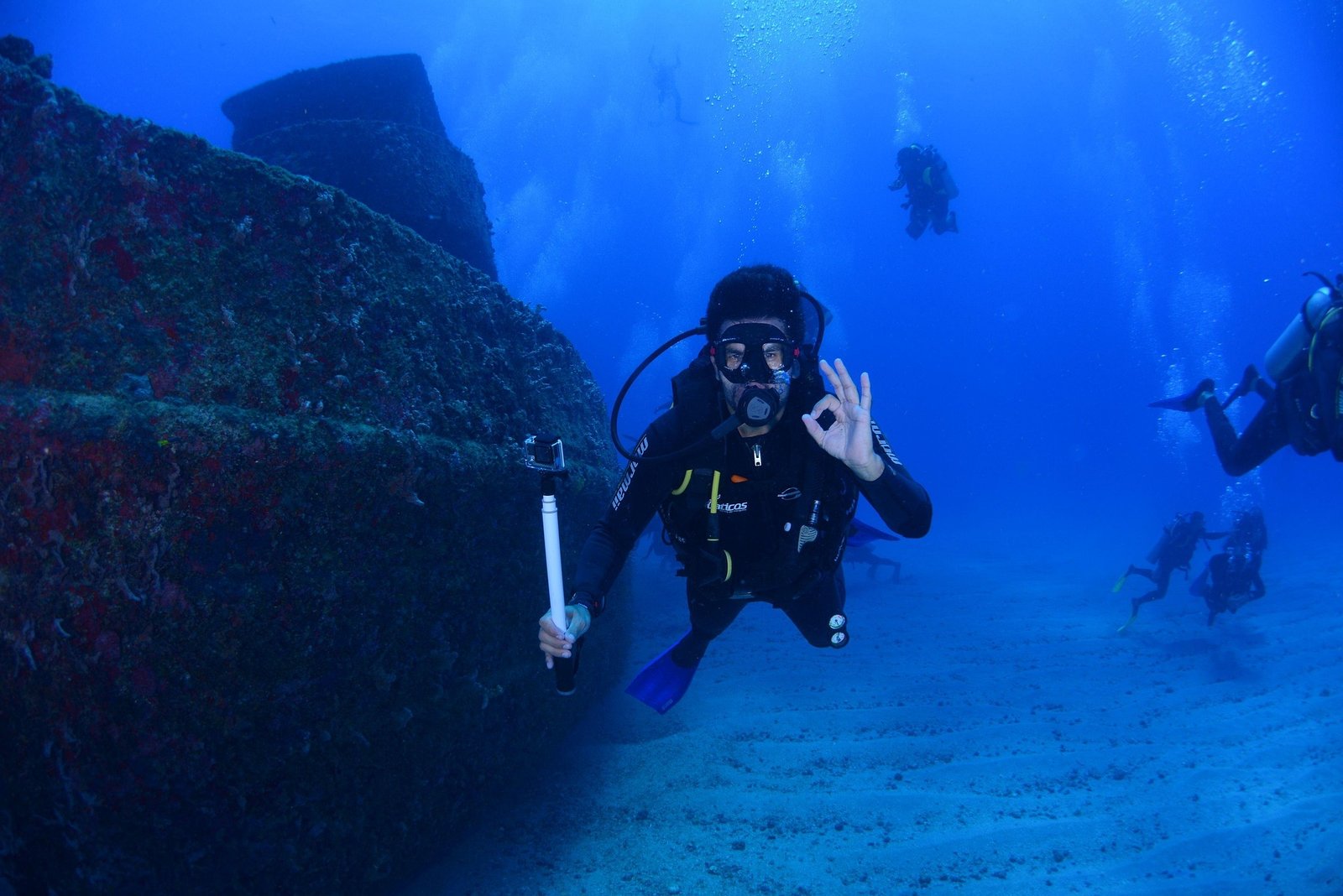
QUICK ANSWER
Yes — scuba diving in Zanzibar is safe for beginners and experienced divers alike.
Zanzibar consistently ranks among East Africa's premier dive destinations. With water temperatures averaging 27–30 °C, visibility commonly reaching 20–30 metres, and dozens of PADI- and SSI-certified dive centres operating under internationally recognised safety standards, the islands offer a well- regulated, beginner-friendly underwater environment. Provided you dive with a licensed operator, maintain correct equipment protocols, and follow open-water safety rules, the risks are minimal and entirely comparable to diving anywhere in the developed world.
Why Zanzibar Is One of Africa’s Safest Dive Destinations
Zanzibar — the archipelago comprising Unguja (the main island), Pemba, and several smaller islets — sits approximately 35 kilometres off the Tanzanian coastline in the western Indian Ocean. Its reef systems lie within the Western Indian Ocean Biodiversity Hotspot, hosting more than 500 species of reef fish, five of the world’s seven sea turtle species, whale sharks, dolphins, and an extraordinary array of macro life. This ecological richness alone draws thousands of divers each year.
What makes Zanzibar genuinely safe, however, is its institutional maturity. Scuba tourism has operated here since the mid-1990s. Today’s dive industry is regulated through PADI (Professional Association of Diving Instructors) and SSI (Scuba Schools International) certification frameworks, supplemented by the Tourism Confederation of Tanzania (TCT) standards. This layered oversight means consistent, auditable safety norms — a critical factor that distinguishes Zanzibar from less developed dive regions in sub-Saharan Africa.
Safety Measures at Certified Zanzibar Dive Centres
1. Certified Instructors and Divemasters
Reputable Zanzibar operators employ instructors holding active PADI or SSI ratings — the two globally dominant recreational dive certification bodies. A PADI Open Water Instructor must complete an Instructor Development Course (IDC), pass a formal Instructor Examination (IE), and maintain Emergency First Response (EFR) certification — equivalent to community-level CPR and first aid. Divemasters, the entry-level professional rating, are trained in rescue techniques, navigation, and emergency management before they can lead recreational dives unsupervised.
At well-regarded centres such as One Ocean Zanzibar, Bahari Divers, Spanish Dancer Divers, and Rising Sun Dive Centre, instructors typically log 500 to several thousand dives in local waters — a level of site-specific knowledge no amount of classroom training substitutes. Before booking, confirm your operator’s instructor credentials; legitimate centres display certification cards and maintain auditable instructor logs. PADI and SSI publish verified operator directories at padi.com/diveshops and divessi.com respectively, searchable by location.
2. Equipment Checks and Maintenance Protocols
A formal pre-dive equipment check is non-negotiable at any professional facility. This encompasses inspection of the regulator first and second stage, BCD (buoyancy compensator device), cylinder pressure, dive computer, mask, fins, and wetsuit. High-volume centres service regulators annually by certified technicians and subject tanks to hydrostatic testing every two to five years — the international industry standard. PADI requires all students to perform the BWRAF buddy check (BCD, Weights, Releases, Air, Final okay) before every open-water dive, irrespective of experience level.
A critical caution: avoid unaffiliated, beach-approach operators who offer discounted dives using ageing equipment with no documented maintenance. This single variable — unverified equipment from an uncertified operator — accounts for the overwhelming majority of avoidable dive incidents in Zanzibar and across East Africa. There is no safe shortcut on equipment maintenance.
3. Controlled and Well-Mapped Dive Sites
Zanzibar’s premier sites — Mnemba Atoll, Pange Reef, Leven Bank, Kendwa Rocks, and Tumbatu Island — are well-charted, routinely surveyed, and operationally managed. Mnemba Atoll, the standout site, is a gazetted marine reserve managed by andBeyond: entry is restricted to licensed operators, boat anchoring on coral is prohibited, and vessel traffic is controlled. These conservation controls serve dual purposes — protecting the reef ecosystem and minimising collision and prop-strike risk for divers at the surface.
Each dive is preceded by a detailed site briefing covering entry and exit methodology, maximum depth, current and tidal conditions, marine life to expect, emergency hand signals, safety stop procedure (3 minutes at 5 metres), and the location of the surface marker buoy (SMB). Maximum depths at beginner sites are capped at 12 metres; intermediate sites run 18–20 metres; advanced sites reach recreational limits of 30 metres. No certified operator should take an uncertified diver beyond 12 metres.
4. Boat Safety and Emergency Infrastructure
All professional dive boats in Zanzibar are required to carry an emergency oxygen kit, first aid equipment, a VHF radio, and a GPS device. In the event of suspected decompression illness (DCI), the nearest hyperbaric chamber facility is at Muhimbili National Hospital in Dar es Salaam — approximately 85 kilometres away and reachable by medical air evacuation. Divers Alert Network (DAN) travel insurance, obtainable for approximately USD 40–50 per year, covers hyperbaric chamber treatment and emergency evacuation. DAN insurance is strongly recommended and required by several operators as a condition of diving.
Zanzibar's Top Dive Sites at a Glance
| DIVE SITE | MAX DEPTH | SKILL LEVEL | MARINE LIFE & KEY NOTES |
|---|---|---|---|
| Mnemba Atoll | 30 m | Beginner–Adv. | Turtles, dolphins, reef sharks, bumphead parrotfish. Protected marine reserve; best site quality on the island. |
| Pange Reef | 18 m | Beginner | Ideal for first dives. Rich soft corals, lionfish, moray eels, nudibranchs. Calm currents year-round. |
| Kendwa Rocks | 12 m | Beginner | Popular for night diving. Octopus, lobster, flatworms. Perfect for newly certified divers. |
| Tumbatu Island | 25 m | Intermediate | Excellent hard coral, napoleon wrasse, occasional hammerhead sharks. Moderate current management required. |
| Leven Bank | 30 m | Advanced | Strong tidal currents; pelagics including barracuda, trevally, and tuna. Experienced divers only. |
| Fundu Gap (Pemba) | 40 m | Advanced | Pristine walls, untouched coral. Pemba offers remote, uncrowded diving; strong currents in exposed sections. |
Real Risks: An Honest Assessment
No dive destination is entirely risk-free, and a responsible safety guide must assess hazards clearly. The following table covers every material risk category in Zanzibar’s recreational dive environment, alongside the evidence-based mitigation for each.
| RISK FACTOR | HOW TO MITIGATE IT |
|---|---|
| Equipment failure — regulators, BCD inflators, O-ring seals. Statistically rare with maintained kit. | Dive only with PADI/SSI centres that enforce documented maintenance cycles. Complete BWRAF buddy check before every dive. |
| Poor swimming ability — PADI minimum requires 200 m continuous swim and 10 min float. Underpreparation increases distress risk. | Complete pool familiarisation honestly. Non-swimmers should choose snorkelling. Do not misrepresent swimming ability on intake forms. |
| Strong currents — Leven Bank and Pemba Island sites carry surge-level tidal currents unsuitable for inexperienced divers. | Respect site ratings. Follow divemaster's real-time current assessment. Abort dives when conditions exceed your training level. |
| Decompression illness (DCI) — caused by ascending too quickly; nitrogen bubble formation in tissues. Risk increases with multiple deep dives. | Follow planned depth-time profiles. Perform 3-min safety stop at 5 m. Use a dive computer. Avoid flying within 18 hrs of last dive. |
| Marine life contact — fire coral, spiny urchins, lionfish, stonefish. None aggressive; injuries from accidental touch only. | Maintain good buoyancy control. Never place hands in reef crevices. Wear a full wetsuit. Follow briefing's marine life guidance. |
| Unverified operators — budget centres with no visible certification, ageing equipment, or no formal briefings. | Verify operator on padi.com/diveshops or divessi.com before booking. Inspect equipment before committing. Leave if in doubt. |
10 Essential Safety Tips for Diving in Zanzibar
✔ | Book only PADI- or SSI-certified dive centres. Verify credentials directly at padi.com/diveshops or divessi.com before payment. |
✔ | Never dive alone. The buddy system is a foundational, non-negotiable safety protocol for all recreational divers at any certification level. |
✔ | Purchase DAN or equivalent dive insurance before departure. Coverage starts from approximately USD 40/year and includes chamber evacuation. |
✔ | Disclose all medical conditions honestly on the operator’s declaration form. Cardiac conditions, asthma, ear perforations, and recent surgery all require physician clearance. |
✔ | Stay well hydrated throughout your dive day. Dehydration is a clinically established risk factor for decompression sickness. Avoid alcohol the evening before diving. |
✔ | Equalise early and often on descent — every 1–2 metres. Never force equalisation through discomfort. Ascend and try again, or abort if equalisation fails. |
✔ | Respect your certified depth limits. Open Water: 18 m. Advanced Open Water: 30 m. Never exceed these limits regardless of guide or peer pressure. |
✔ | Follow the site briefing precisely and completely. Local divemasters carry site-specific hazard knowledge that no guidebook or certification course captures. |
✔ | Do not fly within 12–18 hours of your last dive. Flying post-dive exponentially increases DCI risk due to reduced cabin pressure at altitude. |
✔ | Inspect the boat’s safety kit before departure. Confirm emergency oxygen, first aid kit, VHF radio, and GPS are present and accessible. |
How to Choose a Safe Dive Operator in Zanzibar
Your single most consequential safety decision is your choice of dive operator — more impactful than any other variable. Here is a practical pre-booking verification protocol:
- Verify PADI or SSI certification independently at the official websites — do not rely solely on the operator’s own claims or signage.
- Inspect equipment before committing: check hydrostatic test dates stamped on cylinders, regulator condition, and BCD integrity.
- Ask about instructor-to-student ratios: PADI standards cap Open Water courses at 8 students per instructor and Discover Scuba Diving (DSD) at 4 per instructor.
- Request a preview of emergency procedures — where is the oxygen kit, what is the nearest hospital, what is the emergency protocol for DCI? A professional operator welcomes these questions.
- Read verified reviews on TripAdvisor, Google, and Scuba.com filtered to the last 12 months. Safety-related comments are the most informative signal.
- Confirm DAN insurance requirements: legitimate operators require divers to complete a medical statement and strongly encourage DAN or equivalent coverage.
Best Time of Year to Dive in Zanzibar Safely
Zanzibar has two primary diving seasons. The long dry season — June through October — delivers the calmest seas, highest visibility (20–30+ metres), most stable currents, and the most reliably beginner-friendly conditions across the widest range of sites. The short dry season, December through February, also offers excellent diving with warm water and strong visibility. Whale sharks are most frequently encountered between October and March, attracting advanced divers seeking open-water pelagic experiences.
The long rains (March–May) and short rains (November) reduce surface visibility and can generate choppy conditions, though diving continues year-round at sheltered sites such as Pange Reef and Kendwa Rocks. Water temperature remains between 25 °C and 30 °C throughout the year — a thin 3 mm wetsuit suffices for most divers.
Frequently Asked Questions
Can I dive in Zanzibar with zero experience?
Yes. The PADI Discover Scuba Diving (DSD) programme allows complete beginners to dive to a maximum of 12 metres under direct, continuous instructor supervision, with no prior training required. The programme typically runs half a day including confined-water familiarisation and costs USD 80–120 at most certified centres. A DSD does not qualify you for independent diving; for that, the full Open Water course (3–4 days, USD 350–450) is required.
Is Zanzibar safe for solo travellers who want to dive?
Yes. Solo travellers are matched with a divemaster or designated buddy through the dive centre — you will never be underwater alone on a regulated dive. The never-dive-alone principle is enforced by all reputable operators, irrespective of your certification level or experience.
What certifications can I obtain in Zanzibar?
Most certified centres offer the complete PADI recreational pathway: Discover Scuba Diving, Open Water Diver (3–4 days, certifies to 18 m globally), Advanced Open Water (2 days, extends to 30 m), Rescue Diver, Emergency First Response, and Divemaster. SSI equivalent courses are available at SSI-affiliated centres. All certifications earned in Zanzibar are internationally valid and permanently recognised — there is no need to recertify when diving elsewhere.
Are sharks a danger to divers in Zanzibar?
No. Shark species present in Zanzibar’s recreational dive zones — primarily whitetip and blacktip reef sharks — are docile and curious at worst. Unprovoked shark attacks are exceptionally rare and virtually unrecorded in Zanzibar’s gazetted dive sites. Whale sharks, encountered seasonally near Mnemba, are filter feeders and pose zero threat to divers or snorkellers. Maintaining calm, non-erratic movement underwater and following briefing protocols eliminates any residual risk.
SAFE AND BEGINNER-FRIENDLY — Safari-Safety.com High-Confidence Recommendation
Scuba diving in Zanzibar is among the safest and most rewarding dive experiences in East Africa.
The combination of PADI/SSI-certified operators, well-mapped and ecologically rich dive sites,
year-round warm water, strong institutional oversight, and an experienced local dive industry
makes Zanzibar accessible for complete beginners while remaining genuinely fulfilling for
advanced divers seeking challenging sites and pelagic encounters.
The conditions for safety are straightforward and entirely within your control: dive with a
licensed centre, never dive alone, carry DAN insurance, disclose your health honestly, follow
your briefing, and respect your certified depth limits. Meet those conditions and Zanzibar
offers a world-class underwater experience at a fraction of the cost of comparable destinations
in the Maldives, Red Sea, or Great Barrier Reef.