
- Road accidents are the single leading cause of tourist deaths across Africa, not wildlife.
- Hippos and crocodiles kill far more people than lions — combined estimates exceed 1,500 deaths/year.
- Malaria prophylaxis non-compliance causes the majority of malaria cases in returning travellers.
- Bilharzia (schistosomiasis) infects tourists who swim in Lakes Malawi, Victoria, and Tanganyika.
- Cape buffalo — not lions — is statistically the most dangerous of the Big Five to humans.
- Altitude sickness kills 2–3 climbers on Kilimanjaro per year due to rushed ascent schedules.
- Flash floods in dry riverbeds claim lives every rainy season across East and Southern Africa.
- Urban crime patterns — express kidnappings and phone snatching — are routinely underestimated in Nairobi, Johannesburg, and Dar es Salaam.
- Puff adder bites cause more snakebite deaths in Africa than any other species, including the black mamba.
- Rip currents along East Africa’s Indian Ocean coast are responsible for a disproportionate share of tourist drowning deaths.
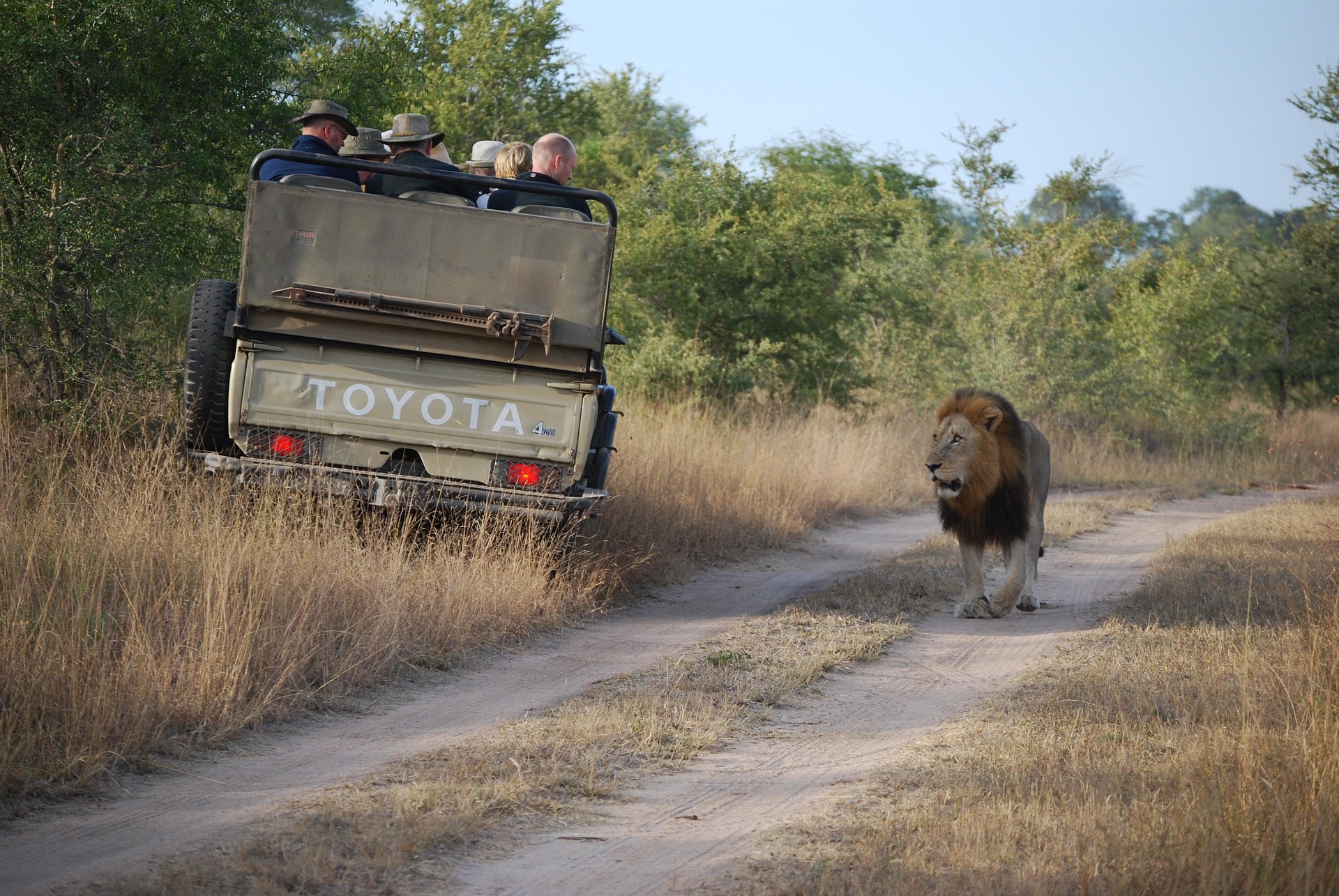
Africa is one of the most extraordinary travel destinations on earth. It is also routinely misunderstood. First-time visitors arrive fixated on the glamour dangers — lion ambushes, elephant charges, venomous mambas — and completely overlook the statistical killers that hospitalise and kill tourists every season. This article is written for people who want a clear-eyed, evidence-based picture of actual risk in Africa, not the dramatised version.
Understanding real risk does not make Africa less worth visiting. It makes you a safer, better-prepared traveller.
~500
Estimated hippo-related deaths per year in Africa
~1,000
Estimated crocodile attacks per year, ~63% fatal
#1
Road traffic: leading cause of tourist death in Africa
200M+
People infected with schistosomiasis globally, Africa dominant
Danger 01 - Road Traffic Accidents
Travel medicine specialists, consular services, and travel insurance actuaries all agree on the same inconvenient fact: road traffic accidents are the leading cause of injury and death among tourists in Africa, outpacing wildlife encounters, tropical disease, and violent crime by a wide margin. The WHO estimates that sub-Saharan Africa has some of the world’s highest road fatality rates per vehicle kilometre travelled, driven by a combination of poorly maintained roads, overloaded vehicles, minimal roadside lighting, and erratic enforcement of traffic laws.
Tourists face compounding risk factors that local residents have partially adapted to. Night driving on unlit highways between safari lodges is statistically one of the most dangerous activities on any Africa itinerary. Hired minibuses for group game drives frequently exceed safe passenger loads. Self-drive rental vehicles involve adapting to driving on the left (southern and East Africa), encountering livestock on unfenced roads after dark, and navigating unsealed tracks without knowing which sections flood or collapse in the rainy season.
The Nairobi–Mombasa highway (A109) in Kenya, the EN1 in Mozambique, and the R61 in South Africa’s Eastern Cape are all among the most accident-prone routes on the continent. Matatu (minibus) travel in Kenya and dalla-dalla travel in Tanzania carry elevated risk due to driver fatigue and speed practices.
Accepting night-time road transfers between parks and airports is one of the most dangerous decisions a safari traveller can make. Insist on daylight travel or fly between destinations if a lodge transfer requires more than 90 minutes of road travel.
When booking safari packages, verify that operators use seatbelts in all game drive vehicles, that drivers have licensed commercial driving qualifications, and that vehicles undergo third-party mechanical inspection. These are non-negotiable criteria, not luxury upgrades.
Danger 02 - Hippos and Crocodiles — Africa's Actual Apex Killer
The lion is the symbol of African danger. The hippopotamus and Nile crocodile are the reality. Across sub-Saharan Africa, these two animals are responsible for an estimated combined 1,500+ human deaths per year — figures that dwarf lion-related fatalities, which are estimated at fewer than 100 annually across the entire continent.
Hippopotamus amphibius is responsible for an estimated 500 human deaths per year across Africa, predominantly in Uganda, Tanzania, the DRC, Mozambique, and Zambia. The animal is almost entirely herbivorous, which creates a dangerous cognitive error in tourists: the assumption that a vegetarian animal is safe. Hippos kill because of territory and pathways, not hunger. They graze on land at night and must return to water at dawn. Any obstacle — a canoe, a fishing boat, a tourist walking between the riverbank and their tent — that blocks or startles a hippo mid-journey triggers a violence response that is almost invariably fatal. A hippo can sprint at 30 km/h over short distances and has canine teeth exceeding 50 cm in length.
Tourist incidents most commonly occur on canoe safaris on the Zambezi River, the Okavango Delta, Lake Naivasha in Kenya, and the Rufiji River in Tanzania’s Selous. Incidents typically happen when canoes approach hippos from the water side (hippos feel cornered) or when tourists walk near water without a guide after dark.
Never exit a boat, canoe, or mokoro near a pod of hippos. Never walk near riverbanks or lakesides after dark without an armed guide. Hippos follow fixed paths between water and grazing areas — tents in camps near water should never be positioned on these routes.
The Nile crocodile (Crocodylus niloticus) kills an estimated 200–1,000 people per year depending on the methodology — the true figure is likely in the range of 600–800 because many attacks in remote riverside communities go unreported. The Nile crocodile is found in nearly every river, lake, wetland, and delta system across sub-Saharan and East Africa: the Nile, Zambezi, Limpopo, Rufiji, Tana, Okavango, and Congo river systems all carry substantial crocodile populations.
Crocodile attacks on tourists spike when visitors wade at river edges without checking, swim in unfamiliar water in game reserve areas, or approach the water near dusk when crocodiles are most active. Notably, several tourist drowning deaths in what appear to be swimming accidents are later attributed to crocodile attack — the victims simply do not surface. Crocodiles are also present, in lower densities, in seemingly placid beach lagoons in coastal Mozambique and the Kenyan coast.
- Wading in rivers or lake margins: Highest risk, especially dawn/dusk
- Swimming in lakes without checking for crocodile status: Lake Malawi’s northern shore has experienced tourist attacks
- Washing dishes or clothes at water’s edge: Common cause of attack for local residents
- Fishing from low riverbanks: Elevated risk; crocodiles associate the motion with prey
- Canoe and boat travel: Low risk as long as you stay in the vessel
Danger 03 Malaria: The Prophylaxis Compliance Crisis
Malaria (primarily Plasmodium falciparum in sub-Saharan Africa) kills approximately 600,000 people per year globally, with Africa accounting for over 90% of cases. Among returning travellers, malaria is one of the most frequent causes of serious illness and death, and the vast majority of cases in tourists are attributable not to a lack of prophylaxis access, but to non-compliance or incorrect use of antimalarial medication.
The four most common prophylaxis failures are: stopping medication early after returning home (Malarone/atovaquone-proguanil must be continued for 7 days post-departure; doxycycline for 28 days); missing doses due to gastrointestinal side effects, particularly with doxycycline; choosing a prophylaxis regimen that doesn’t match the resistance profile of the specific region visited (chloroquine resistance is now widespread across all of sub-Saharan Africa); and underestimating risk because accommodation is air-conditioned or because the trip is during the dry season.
High-risk zones for P. falciparum include: the entire sub-Saharan interior; low-altitude areas of Kenya (below 2,500m — Nairobi at 1,795m is generally considered lower risk but not zero risk); all of Tanzania including Zanzibar; Mozambique; Zambia; Malawi; Zimbabwe; and West Africa broadly. The risk is year-round in most of these locations, not seasonal.
Malaria symptoms can appear up to 12 months after returning from Africa. Any fever in a returned traveller — even weeks or months after the trip — must be treated as potential malaria until ruled out by a blood test. Delayed diagnosis is the primary cause of malaria deaths in tourists in Europe and North America.
Consult a travel medicine specialist (not a general practitioner) at least 6 weeks before departure. Bring insect repellent containing 30–50% DEET, permethrin-treated clothing, and a travel medical kit that includes a rapid malaria test (RDT) for remote itineraries. Sleep under a permethrin-treated mosquito net even in air-conditioned lodges during power cuts.
Danger 04 Bilharzia (Schistosomiasis) — The Freshwater Parasite Tourists Never Expect
Schistosomiasis (Bilharzia) is a parasitic infection caused by flatworm larvae (cercariae) released by freshwater snails into slow-moving or still freshwater bodies across Africa. The WHO estimates that over 200 million people globally are infected, with Africa bearing the overwhelming majority of the burden. For tourists, it is one of the most routinely overlooked hazards in Africa because it requires only brief exposure — as little as 30 seconds of skin contact with infected water — and produces no immediate pain or sensation at the point of infection.
The following bodies of water carry documented or high-probability schistosomiasis risk for travellers:
- Lake Malawi: Particularly the southern and central shores; documented tourist infections; risk varies by shore section
- Lake Victoria: All shorelines in Uganda, Kenya, and Tanzania; high transmission intensity
- Lake Tanganyika: Risk present, though some deep-water zones have lower snail densities
- Zambezi River system: Including the Okavango Delta and Victoria Falls spray zones
- Nile River (Uganda/Ethiopia): White Nile white-water rafting sections near Jinja carry documented risk
- Niger River delta and West African river systems: Broad distribution
The infection often presents only weeks or months later as “Katayama fever” (acute schistosomiasis) — a flu-like syndrome with fever, urticaria, and eosinophilia — which is frequently misdiagnosed as malaria or dengue by physicians unfamiliar with tropical medicine. Chronic infection damages the liver, spleen, bladder, and intestinal tract. Praziquantel treatment is highly effective but must be administered after the cercariae have matured into adult worms (6–8 weeks post-exposure).
There is no reliably safe area in Lake Malawi, Lake Victoria, or the Zambezi system for swimming from a bilharzia perspective. Chlorinated private pools are safe. Fast-moving streams above 1,500m in East Africa are lower risk. Kayaking with skin exposed at or below waterline in these systems carries real risk even without full submersion.
Danger 05 Cape Buffalo — Not the Lion, Not the Elephant
Of the so-called Big Five — lion, leopard, elephant, rhino, and buffalo — the African buffalo (Syncerus caffer) is statistically the most dangerous to professional hunters and field guides, and arguably the most dangerous to tourists who exit vehicles in areas with large buffalo populations. Buffalo are responsible for an estimated 200 human deaths per year in Africa. This figure exceeds lion-related fatalities significantly.
The reason buffalo are so dangerous is a combination of characteristics that operators should brief all clients on: they are unpredictably aggressive, they form large herds that can charge collectively, they have excellent memories and will reportedly “ambush” perceived threats if given an opportunity, and their bulk (up to 900 kg) and horn configuration (massive boss across the forehead, hooking upward) means a goring almost always causes severe trauma.
Particularly dangerous are old solitary bulls known in Swahili/Afrikaans as “dagga boys” — bulls expelled from the herd that spend time wallowing alone in mud and are more reactive to human presence than herd animals. These bulls are regularly encountered in dense riverine bush, around waterholes, and near lodges in unfenced reserves. Unlike herd buffalo, there is no safety-in-numbers social structure moderating their behaviour.
Never walk between a buffalo and its escape route to water or dense cover. A buffalo displaying a broadside profile, a raised head, and a fixed stare is conducting a threat assessment, not a bluff. If a guide stops and retreats slowly without explanation, follow immediately and do not ask questions until you are clear.
Danger 06 Altitude Sickness on Kilimanjaro and High-Altitude Destinations
Mount Kilimanjaro at 5,895m is Africa’s highest peak and one of the world’s most accessible high-altitude treks — which creates a paradox: the accessibility encourages operators to market rapid ascent routes, and the marketing of those routes kills people. Between 2 and 10 climbers die on Kilimanjaro each year from altitude-related illness, primarily High Altitude Pulmonary Oedema (HAPE) and High Altitude Cerebral Oedema (HACE), though the Kilimanjaro National Park Authority and KINAPA do not publish comprehensive mortality statistics. Field estimates from Kilimanjaro Rescue are that acute mountain sickness (AMS) affects between 30% and 75% of climbers depending on the route chosen.
The Marangu Route (5–6 days) has the lowest summit success rate (approximately 35–45%) and the highest proportion of altitude illness evacuations because of its rapid ascent profile. The Lemosho Route (7–9 days) allows for better acclimatisation and produces summit success rates of 90%+ in fit travellers. The commercialised “5-day budget climb” packages advertised at Kilimanjaro’s Moshi gate are a significant factor in altitude death and rescue on the mountain.
Other high-altitude hazards in Africa include Mount Kenya (Point Lenana: 4,985m; Batian summit: 5,199m), the Rwenzori Mountains in Uganda (Margherita Peak: 5,109m), the Simien Mountains in Ethiopia (Ras Dashen: 4,550m), and the Drakensberg plateau in South Africa, where altitude itself is less dangerous but sudden weather changes cause hypothermia in underprepared hikers.
- Headache at altitude plus any one of: fatigue/weakness, GI symptoms, dizziness, poor sleep = Acute Mountain Sickness (AMS)
- Ataxia (loss of coordination) or altered consciousness: HACE — descend immediately, administer dexamethasone if available
- Breathlessness at rest, pink frothy sputum, cyanosis: HAPE — life-threatening, descend immediately
- The Lake Louise Score (LLS): Score of 3+ indicates AMS; do not ascend further
- Acetazolamide (Diamox): 125–250mg twice daily for prophylaxis; requires a prescription and pre-trip medical consultation
Danger 07 Flash Floods and Dry Riverbeds
Every year in East and Southern Africa, tourists are killed or trapped by flash floods in riverbeds that appeared bone-dry and safe to drive, walk, or camp in. Seasonal flooding is one of the most underestimated geographic hazards on the continent and the danger is counterintuitive: the rain that causes the flood may have fallen 100km or more upstream, in mountains the tourist cannot see, while the sky overhead is clear and blue.
In Kenya, the Ewaso Nyiro, Athi, and Tana Rivers have flash-flooded vehicle crossings with no warning. In South Africa’s Eastern Cape and Limpopo provinces, dry dongas fill within minutes. In Botswana’s Makgadikgadi and Nxai Pan systems, tracks crossing seasonal pans become impassable — and occasionally deadly — after rain. The Namib Desert in Namibia experiences episodic flash floods in rocky canyon systems that are tourist hiking destinations, including the Fish River Canyon and the Hartmann Valley.
Never camp in, drive through, or set up a picnic in a dry riverbed or seasonal pan during Africa’s rainy season. A flood wave from a distant storm travels faster than a running human. If water levels begin rising in any river crossing during transit, do not attempt to cross — turn back immediately.
Danger 08 Urban Crime: What the Statistics Actually Show
Urban crime is frequently over-dramatised in Africa travel media, leading to two opposing errors: dismissing it entirely because the drama seems exaggerated, or avoiding cities entirely and missing extraordinary urban destinations. The reality is nuanced, location-specific, and manageable with evidence-based precautions.
Johannesburg has one of the highest rates of violent crime of any large city in the world outside active conflict zones. The CBD, Hillbrow, Yeoville, and parts of the inner south are no-go zones for tourists without local knowledge and accompaniment. Tourist-relevant crime in Joburg concentrates around ATM fraud, phone snatching, and — increasingly — “express kidnapping,” in which victims are forced to withdraw maximum cash from multiple ATMs. Sandton, Rosebank, and Melrose Arch are significantly safer precincts but not immune.
Nairobi’s tourist risk profile is different from Johannesburg’s. High-visibility street crime — phone snatching by passing motorcycles and on foot — is the dominant modality in tourist-frequented areas including the CBD, Westlands, and along Uhuru Highway. Armed robbery occurs primarily at isolated ATMs after dark and in underlit parking areas. The upscale neighbourhoods of Karen, Langata, Gigiri, and Muthaiga have dramatically lower risk profiles. Nairobi National Park borders the city to the south and wildlife occasionally moves through residential areas — a genuine non-crime hazard unique to this city.
- Use in-app ride-hailing (Uber, Bolt, Little Cab in Kenya) rather than hailing taxis from the street — carjack risk reduction is significant
- Carry a “decoy wallet” with a small amount of local currency and an expired card; hand it over without resistance in a street robbery
- Keep smartphones off or pocketed when walking in urban public spaces; most phone snatches occur when the device is visibly in use
- Do not withdraw cash at ATMs after dark; use ATMs inside supermarkets or mall banking halls during business hours
- Research accommodation location specifically on the Numbeo Crime Index (city/neighbourhood level) before booking
Danger 09 Venomous Snakes — Puff Adder First, Mamba Second
The black mamba (Dendroaspis polylepis) has the most terrifying reputation of any African snake, and justifiably so — its venom is a fast-acting neurotoxin, its speed is genuine (up to 12–16 km/h over short bursts), and an untreated bite is almost invariably fatal within 7–24 hours. But tourists almost never encounter black mambas. The snake is shy, reclusive, and avoids human activity wherever possible.
The puff adder (Bitis arietans) is responsible for more snakebite deaths in Africa than any other species because of its camouflage, ambush behaviour, and near-ubiquitous distribution from Senegal to the Cape. It does not flee when approached — it relies on cryptic coloration and stays still, which means hikers, trail runners, and anyone walking through bush step on them without warning. Puff adder venom is cytotoxic and causes massive tissue necrosis; without rapid antivenom administration, limb amputation or death frequently results.
The Mozambique spitting cobra (Naja mossambica) spits venom accurately up to 2.5m and aims for the eyes — temporary or permanent blindness results without immediate irrigation. The boomslang (Dispholidus typus), though rear-fanged and docile, delivers a haemotoxic venom that causes uncontrolled bleeding 1–3 days post-bite, by which time victims are far from medical care. Gaboon vipers in Central and West Africa deliver the largest venom yield of any African species.
Wear closed-toe shoes and long trousers when walking in bush. Shuffle your feet rather than stepping silently to give snakes advance warning. Never reach into rock crevices, hollow logs, or under tent groundsheets without looking. In the event of any snakebite: immobilise the limb, apply a compression bandage (NOT a tourniquet), keep the victim calm and still, and evacuate to a facility with antivenom within 4 hours. Do not cut, suck, or apply ice.
Danger 10 Ocean Rip Currents on East Africa's Coastline
East Africa’s Indian Ocean coastline — Zanzibar, Pemba, the Kenyan coast from Diani to Watamu, Mozambique’s Bazaruto Archipelago and Tofo, and Madagascar’s coasts — is among the world’s most beautiful beach holiday territory. It is also poorly equipped with lifeguard infrastructure, inconsistently marked with rip current warnings, and hosts visitors who are unfamiliar with reef-influenced tidal patterns that make rip currents here different in character from beaches in Australia or California.
Rip currents form in breaks (channels) through barrier reefs and pull swimmers offshore at speeds of up to 8 km/h — faster than an Olympic swimmer can manage against the flow. Drowning deaths at Diani Beach, Zanzibar’s northern beaches (Nungwi, Kendwa), and Mozambican resort areas are documented every high-tourism season. The problem is compounded by: snorkelling tourists exhausted from fighting a current; non-swimmers wading in waist-deep water that suddenly deepens in a channel; and alcohol consumption combined with beach swimming in the late afternoon.
Never swim directly against a rip current — you will exhaust yourself. Swim parallel to the shore until you exit the current’s channel, then angle back toward the beach. If you cannot escape, float and signal for help. Before entering the water at any unfamiliar East African beach, ask a resort staff member specifically about rip current locations — not a generic “is it safe to swim” question.
Danger 11 Heat Stroke and Dehydration in Desert and Semi-Arid Regions
Africa contains four distinct major desert systems: the Sahara (9.2 million km²), the Namib (81,000 km²), the Kalahari (900,000 km²), and the Danakil Depression in Ethiopia/Eritrea — the hottest inhabited place on Earth, with recorded surface temperatures exceeding 55°C. Heat stroke is a genuine life-threatening risk for tourists in these environments, and it kills because it progresses rapidly and because remote desert locations mean that evacuation to medical care takes hours or days.
The insidious nature of heat illness is that mild-to-moderate dehydration significantly impairs cognitive function and judgement before the victim feels severely thirsty. This is why tourists in Namibia’s Damaraland, the Sossusvlei dunes, or Morocco’s Saharan border zone make catastrophic navigational errors when they are already physiologically compromised.
- At rest in shade (35–40°C): 500ml per hour minimum
- Light activity (walking, photography): 750ml–1L per hour
- Strenuous activity (dune climbing, hiking): 1–1.5L per hour
- Urine colour check: Pale straw = adequate hydration; dark amber = early dehydration; brown = severe, seek shade immediately
- Never rely on thirst alone — thirst mechanisms lag significantly behind physiological dehydration in heat
Danger 12 Rabies from Wildlife and Dog Contact
Africa has one of the highest rates of human rabies mortality in the world — the WHO estimates approximately 21,000 deaths per year across the continent, primarily from domestic dog bites in rural communities. For tourists, the risk profile is different but real: contact with vervet monkeys (a major draw at lodge pools across East Africa), baboons, bats, mongoose, and wild dogs all carry potential rabies transmission risk.
The critical facts for tourists are: rabies is 100% fatal once symptoms appear; post-exposure prophylaxis (PEP) is effective if started promptly but requires 4 doses of vaccine (and sometimes rabies immunoglobulin) over 14 days; and rabies immunoglobulin is frequently unavailable outside major East and Southern African hospitals. Pre-exposure prophylaxis (3-dose vaccine series before travel) simplifies post-exposure treatment significantly and is strongly recommended for any itinerary involving remote wildlife areas, cave exploration (bat guano risk), or extended travel periods.
Vervet monkey scratches or bites at lodges — from animals that appear habituated and friendly — require immediate wound washing (minimum 15 minutes with soap and water) and urgent medical consultation. Monkey bites at tourist lodges are a surprisingly frequent event and a significantly underreported rabies exposure in East Africa.
Danger 13 Fake Tour Operators and Unlicensed Guides
The unregulated end of the African tourism industry kills tourists with a reliability that almost no other category of danger matches. The mechanism is indirect but clear: unlicensed operators cut corners on vehicle maintenance, insurance, guide-to-client ratios, rescue protocols, emergency communication equipment, and first aid qualifications. When something goes wrong in a remote location with an unlicensed operator, the consequences are catastrophic.
Reported incidents range from Kilimanjaro climbers abandoned at altitude by cut-price operators who ran out of porters’ food, to game drives conducted in vehicles with bald tyres and no communication equipment, to “budget dhow cruises” in Zanzibar that capsize because the vessel was overloaded and had no life jackets. The budget safari market in Tanzania, Kenya, Uganda, and Zambia is particularly heavily penetrated by operators whose licences are either expired, fictitious, or obtained through corrupt channels.
- Kenya: KATO (Kenya Association of Tour Operators) member verification at kato.co.ke; KEPHIS and KWS licensing for game operators
- Tanzania: TATO (Tanzania Association of Tour Operators) at tato.or.tz; TANAPA operator licensing
- South Africa: SATSA (Southern Africa Tourism Services Association) membership and SATSA bonding
- Zambia: ZATO (Zambia Association of Tour Operators) at zato.org.zm
- Uganda: AUTO (Association of Uganda Tour Operators) at auto.or.ug
- All markets: Request a copy of the operator’s Public Liability Insurance certificate (minimum $1M cover) before booking any remote or high-risk activity
Danger 14 Food and Waterborne Illness
Traveller’s diarrhoea affects an estimated 20–50% of tourists visiting sub-Saharan Africa, depending on destination and hygiene precautions taken. While the majority of cases are self-limiting and uncomfortable rather than dangerous, the disease burden includes serious conditions: typhoid fever (Salmonella typhi), hepatitis A, cholera (endemic in several African countries with ongoing outbreaks as of 2025–2026 in DRC, Ethiopia, Zimbabwe, and Mozambique), Campylobacter enteritis, and non-typhoidal Salmonella. Enteric fever (typhoid) is particularly relevant for tourists in rural East and West Africa and requires vaccination before travel, yet remains one of the most commonly skipped travel vaccines.
Street food carries variable risk — some of the safest food is freshly cooked and piping hot from a street vendor; some of the most dangerous is buffet food at mid-range hotels that has been lukewarm for hours. The WHO mantra “boil it, cook it, peel it, or forget it” remains the most reliable field heuristic.
Tap water is not potable in the vast majority of sub-Saharan African cities without treatment. Exceptions include South Africa’s major metropolitan areas (though post-Day Zero Cape Town and Johannesburg’s infrastructure deterioration have complicated this). In all other countries, assume tap water requires boiling, chemical treatment, or filtration. Ice cubes in drinks are a frequent transmission route even in upmarket hotels. Bottled water should be checked that the seal is intact, as refilling with tap water and resealing is a documented practice at some hotels in budget destinations.
Danger 15 Political Instability and Conflict Zone Proximity
Africa’s conflict geography changes rapidly and is poorly understood by most tourists. The Sahel region — Mali, Burkina Faso, Niger, and Chad — has undergone a fundamental security transformation since 2020, with multiple military coups, the withdrawal of French peacekeeping forces, and the expansion of JNIM (Jama’at Nusrat al-Islam wal-Muslimin) and ISGS (Islamic State in the Greater Sahara) into territory that was previously accessible to tourists. The historic trans-Saharan overland tourist corridor through Mali and Niger is now effectively closed to independent travel.
The eastern DRC remains one of the most active conflict zones on earth, with the M23 rebellion and FDLR activity making North Kivu and South Kivu provinces extremely high-risk. Sudan has been in active civil war between the SAF and RSF since April 2023 with substantial civilian casualties. Somalia, excluding Somaliland and to some extent Puntland, remains a kidnap-and-terrorism environment for any foreign national.
Always cross-reference the travel advisories of at least two independent government foreign affairs departments before visiting any African destination — the UK FCDO (gov.uk/foreign-travel-advice), the US State Department (travel.state.gov), and Australia’s Smartraveller (smartraveller.gov.au) use different risk thresholds and often provide complementary detail. A “Level 3: Reconsider Travel” US State advisory or a UK FCDO “advise against all but essential travel” designation for a region should be treated as definitive guidance, not bureaucratic overcaution.
“The single best predictor of tourist safety in Africa is not which country you visit — it is how well-informed you are about the specific risks of the specific activities you have chosen.”
Risk SummaryDanger Comparison at a Glance
| Danger | Tourist Perception | Actual Risk | Mitigation Complexity |
|---|---|---|---|
| Road accidents | Underestimated | Very high | Moderate — choose operators carefully |
| Hippos / Crocodiles | Underestimated | High | Low — follow guide rules strictly |
| Malaria | Mixed | High in endemic zones | Low — prophylaxis + compliance |
| Bilharzia | Severely underestimated | High in specific waters | Very low — avoid freshwater swimming |
| Cape Buffalo | Underestimated | Moderate | Low — stay in vehicles; follow guide |
| Altitude sickness | Underestimated | Moderate–High | Moderate — choose longer routes |
| Lions | Overestimated | Very low | Very low — standard safari protocols |
| Rip currents | Underestimated | Moderate | Low — ask before swimming |
| Puff adder / snakes | Mixed | Moderate | Low — footwear + awareness |
| Urban crime | Variable | Moderate — city-specific | Moderate — neighbourhood choices |
Final WordThe Informed Traveller’s Advantage
Africa’s actual danger profile is very different from its perceived danger profile. The glamour predators — lions, leopards, black mambas — are real, but they are also broadly well-managed within the safari industry infrastructure and carry statistically low risk to tourists who follow professional guide instructions. The genuine killers — road accidents, hippos, malaria non-compliance, bilharzia, urban crime, and altitude illness — are not mysterious or unlucky. They are predictable, documented, and, in the vast majority of cases, preventable.
The travellers who are hospitalised, evacuated, or killed on African trips are not disproportionately adventurous or reckless. They are disproportionately uninformed. They booked a trip, packed their bags, and assumed that the operator, the guidebook, or the lodge would take care of the details. Sometimes they are right. When they are wrong, the cost is very high.
Use this guide as a starting framework. Consult a travel medicine specialist before departure. Research the specific operator, the specific route, the specific body of water, and the specific city neighbourhood for each element of your itinerary. Africa rewards the prepared traveller with experiences that exist nowhere else on earth. It punishes the negligent one without sentiment.